


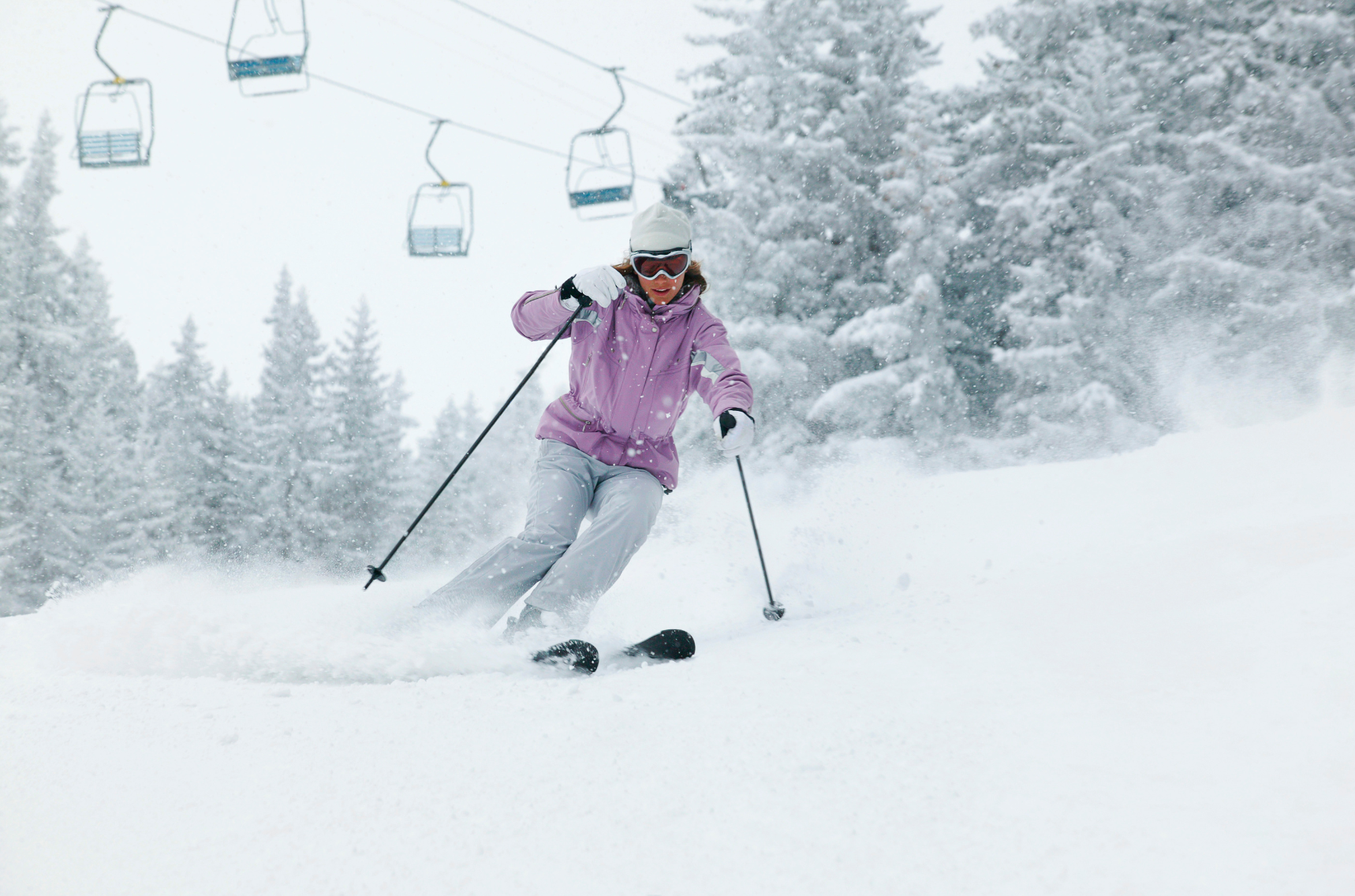
 What could be better than winter in Vancouver! It’s a haven for all kinds of sports, including downhill skiing, snowboarding, snowshoeing, cross country skiing and hockey. Especially now that we have some snow this year! If you participate in these active sports, you’re well-aware that sometimes you can get hurt. I’ve talked about all kinds of sports injuries in the past, but there aren’t many more painful than rib injuries.
We’re all aware of our ribs, but did you know that you actually have 24 ribs—12 on each side? Each pair of ribs are connected to your spine in the back and the upper seven, called true ribs, are also attached to your sternum, or breastbone, in the front. The next three ribs, called false ribs, are attached to the bottom of your true ribs by costal (rib) cartilage. The lower two, number 11 and 12, are called floating ribs because while they’re attached to your spine in the back, they aren’t attached to anything in the front. The vertebrae in your spine that are attached to your ribs are called your thoracic vertebrae. They are numbered 1 through 12, and your first rib is attached to thoracic vertebrae 1 (T1), the second rib is attached to T2, and so on. In addition to being attached to your spine and some to your sternum, your ribs are also reinforced by ligaments and intercostal muscles. This structure allows your ribs to expand and contract when you inhale and exhale.
Your ribs are meant to protect the internal organs of your upper body, but ribs can be injured, cracked and broken. A slip on the ice, being overenthusiastically checked playing hockey, a collision or wipeout on the slopes, a car accident, or other kinds of trauma or crush injuries are common sources of rib injuries. However, sometimes rib injuries don’t involve a fracture. It’s possible to bruise the area around your ribs or chest wall, strain the intercostal muscles, or separate a rib from the costal cartilage or sternum. However, ribs can certainly become fractured. Because your ribs are curved, they’re made to flex to a certain extent, but when they’re exposed to severe enough trauma, ribs will fracture—typically at the weakest point, which is at the outermost curve.

If you suspect a rib injury, it’s important to check with your health care provider, because a rib fracture can cause injury to your internal organs, such as a lung collapse or puncture, trauma to your heart or the vessels near your heart, or a ruptured spleen. In very severe rib fractures, in which several ribs are broken, an emergency condition called flail chest can occur, in which your ribs are unable to facilitate normal air pressure in your lungs. Your doctor will likely order an X-ray to determine if you have fractured or cracked one or more ribs.
If you have ever had a rib fracture or injury, you are well aware of how very painful it can be. Or if you know someone who has had a rib injury, my guess is that the first thing they told you about it is how much and for how long it hurt. They may also have told you that there were points when they felt that their ribs would never heal. And the pain? Did I mention how much it hurts? Rib pain can cause muscle spasms, restrict your movement and make it very uncomfortable to cough or sneeze. In fact, people who have pain from a rib injury are at a higher risk for developing pneumonia, because it’s too painful to cough deeply enough to clear their lungs. Rib. Injuries. Hurt!
So, what’s the treatment for rib injuries? Sadly, traditional treatments don’t offer much—rest, pain medications, NSAIDs (non-steroidal anti-inflammatory meds), ice early on and avoiding anything that makes the pain worse. You will be told that you just have to let your ribs heal, and it can take a long time—typically six to eight weeks. Most people are uncomfortable, but would choose not to take pain medications for such a long time.

The good news is that both acupuncture and laser treatments can be effective in reducing pain related to rib fractures, and this effectiveness is backed up by research. Acupuncture is a safe and effective treatment for rib pain, as it works locally to reduce inflammation and increase circulation, which brings healing blood and nutrients to the injured area. It also works to reduce pain in a couple of ways. Acupuncture ramps up your body’s own pain-relieving opioid chemicals, and it increases the circulation of feel-good neurotransmitters called endorphins that can help provide a sense of calm and reduce pain. Your acupuncturist can also address the painful trigger points that are responsible for muscle spasms and focal pain points related to your rib injury.
Cold laser therapy or photobiomodulation is also a good choice for treating rib injuries. It uses red and infrared light to gently produce chemical reactions deep in the injured tissue, at the cellular level. The effect is to target the injured tissues and surrounding capillaries to speed up the healing response in your cells and decrease pain, inflammation and swelling.
Your acupuncture practitioner may also apply heat therapy in the form of far-infrared heat. Often delivered by what looks like a heat lamp, far-infrared heat also penetrates deeply into your tissues to gently warm, increase circulation and relax your muscles—all of which help speed up the healing process and reduce pain.
The bottom line is that your rib fracture or injury is going to hurt—a lot! But it will heal with time, and if you do have the bad luck to injure your ribs, acupuncture, cold laser therapy and far-infrared heat are effective for pain relief and to promote faster healing. If you’ve sustained a rib injury and want to know more about how I can help, please contact me.
Click here for a free 15-minute consultation!


Dr. Jeda Boughton is a Doctor of Traditional Chinese Medicine and Registered Acupuncturist in Vancouver. She is also a Registered Herbologist and the founder of BodaHealth.


